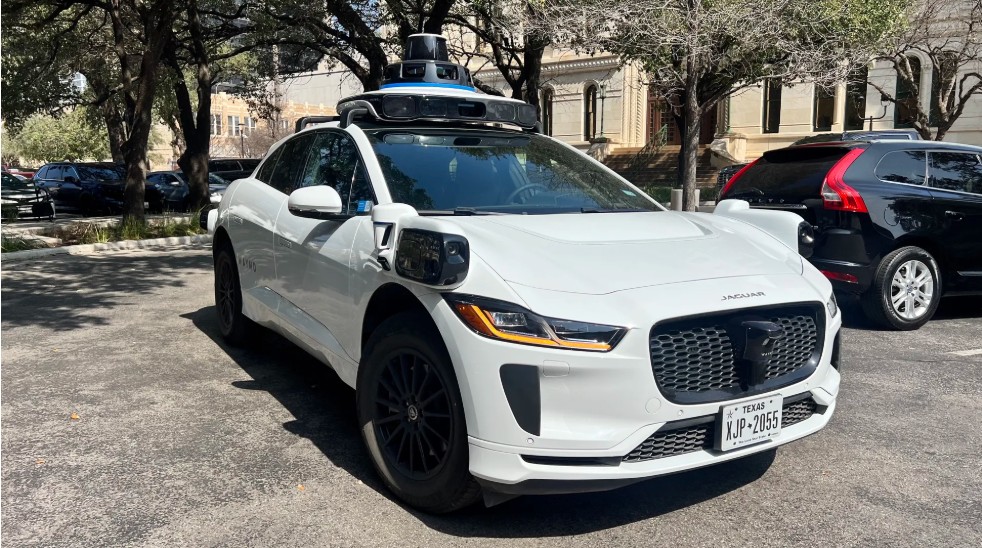

Lagos, April 18, ’26 (TNZ) Waymo stands at the forefront of the autonomous driving revolution, representing a significant shift in how we perceive personal and public transportation. Initiated from Google’s ambitious research labs, the project was established to prove that machines could navigate complex environments more safely and efficiently than human drivers.
The genesis of this technology dates back to January 2009. It was initiated as the Google Self-Driving Car Project, a secretive venture spearheaded by Google co-founders Larry Page and Sergey Brin. They recruited Sebastian Thrun, a renowned robotics expert, to lead the team, which was housed within the experimental “Google X” lab.
The team’s initial goal was to test the feasibility of autonomous navigation on public roads. By outfitting a standard Toyota Prius with custom-built hardware and proprietary software, they successfully demonstrated that a vehicle could safely traverse thousands of miles, including challenging routes across California.
In 2016, the project reached a pivotal milestone. It graduated from a research-focused experimental phase and became an independent subsidiary of Alphabet Inc., rebranded as Waymo. This transition marked a strategic shift towards commercialisation and the development of a scalable, fully driverless ride-hailing service.
The company’s technology relies on a sophisticated suite of sensors, including LiDAR, radar, and high-resolution cameras. These sensors create a real-time, 360-degree view of the vehicle’s surroundings, allowing the “Waymo Driver”—the company’s AI software—to detect pedestrians, cyclists, and other vehicles with high precision.
Today, in 2026, Waymo has solidified its position as a leader in the robotaxi industry. It operates fully autonomous, 24/7 commercial services across several major metropolitan areas in the United States, including Phoenix, San Francisco, Los Angeles, Austin, Atlanta, and Miami.
The company has expanded its operational footprint significantly, moving beyond simple suburban testing into complex urban centres. It provides hundreds of thousands of paid trips weekly, demonstrating the robustness of its technology in varying traffic conditions, weather patterns, and dense pedestrian environments.
Looking ahead, the company is not content with limiting its influence to North America. Pilot programmes are currently underway to test the technology in select international markets, signalling intent to bring autonomous mobility solutions to diverse global cities.
The prospect of African countries embracing this technology is a topic of growing academic and industrial interest. While the primary focus of autonomous vehicle deployment remains in highly developed, digitally connected cities, the potential benefits for the African continent are profound.
In many African nations, the transport sector is the backbone of the economy, yet it often faces challenges related to safety, congestion, and infrastructure gaps. Autonomous technology, if adapted correctly, could offer a pathway to improved road safety by reducing accidents largely caused by human error.

Furthermore, the technology holds promise for increasing mobility inclusivity. It could provide reliable transport for the elderly, individuals with physical disabilities, and those in underserved regions. These categories of people may currently face barriers to accessing essential services, education, or employment opportunities.
However, the path to implementation in Africa is complex. The technology requires high-quality road infrastructure, clear lane markings, and consistent internet connectivity—elements that are still developing in many regions. Without these foundational requirements, the “Waymo Driver” would face significant environmental challenges.
There is also the critical issue of public acceptance. Many citizens in emerging markets express concerns regarding job displacement. This is, particularly true for those employed in the massive public transport and logistics sectors. Navigating the social and economic impact on these livelihoods is a vital policy consideration.
Despite these hurdles, there is notable optimism. Research indicates that policymakers and the public in various African nations recognise the potential usefulness of autonomous vehicles. Many are enthusiastic about how automation could optimise traffic flow and reduce the environmental footprint of transportation.
The integration of electric vehicle (EV) technology with autonomous systems is another area of interest. By combining clean energy with self-driving capabilities, African nations could potentially leapfrog older, polluting transport models. This will be in favour of sustainable, efficient, and modern mobility solutions.
Achieving this will require proactive, forward-thinking regulation. Governments would need to establish robust frameworks that govern safety, cybersecurity, and data privacy. Collaboration between technology developers, local authorities, and community stakeholders is essential to ensure that the technology serves local needs.
Ultimately, the adoption of such advanced technology on the continent will likely be a gradual process. It may start with pilot programmes in controlled environments or specific “smart city” zones. From there, it can expand, moving toward broader urban integration, tailored to the unique cultural and geographic realities of each country.
The story of Waymo is a reminder of how quickly “moonshot” ideas can become daily realities. It humbly began in a secret lab to operating robotaxis in major cities. From there, it has been proven that innovation is driven by persistence and rigorous testing.
As the world continues to watch the evolution of autonomous driving, the dialogue surrounding its global application remains vital. Whether in San Francisco or the growing metropolitan hubs of Africa, the focus is on the core goal. That is, making travel safer, more accessible, and more efficient for everyone.
The journey ahead for Waymo involves continuous refinement of its software and hardware, ensuring that its systems are as versatile as the human drivers they aim to assist or replace. As the technology matures and costs decrease, the vision of a world with widespread autonomous mobility inches closer to fruition. (TNZ)
This feature article was written with additional AI-generated contents

Do you have a flair for Citizenship Journalism? Share stories of local happenings with TheNewsZenith on WhatsApp: +2348033668669. For more scintillating news, visit our website: www.thenewszenith.com. Also follow us on YouTube: www.youtube.com/@thenewszenithOnline, Facebook: www.facebook.com/@thenewszenithonline & TikTok: www.tiktok.com/@thenewszenithonline. Because quality journalism costs money and effort, we humbly seek your kind donation to enable us to continue serving you better. Send donations to Guarantee Trust Bank 0705198504